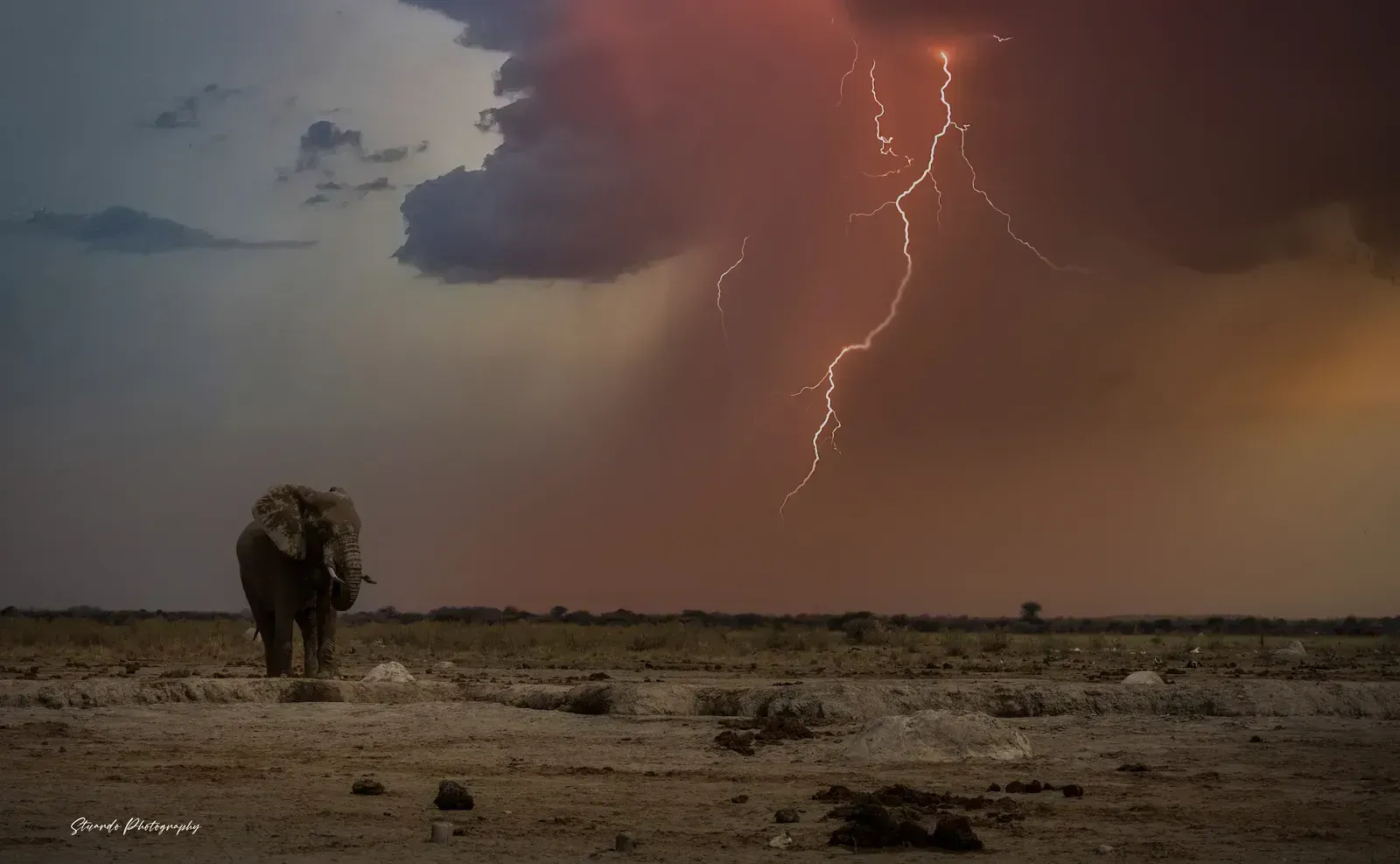
Etosha rings one of Africa's largest salt pans, a bleached, blinding expanse fringed by pale grass and thornbush. The whole park is built around its waterholes, and in the dry season the wildlife arrives at them in extraordinary numbers.
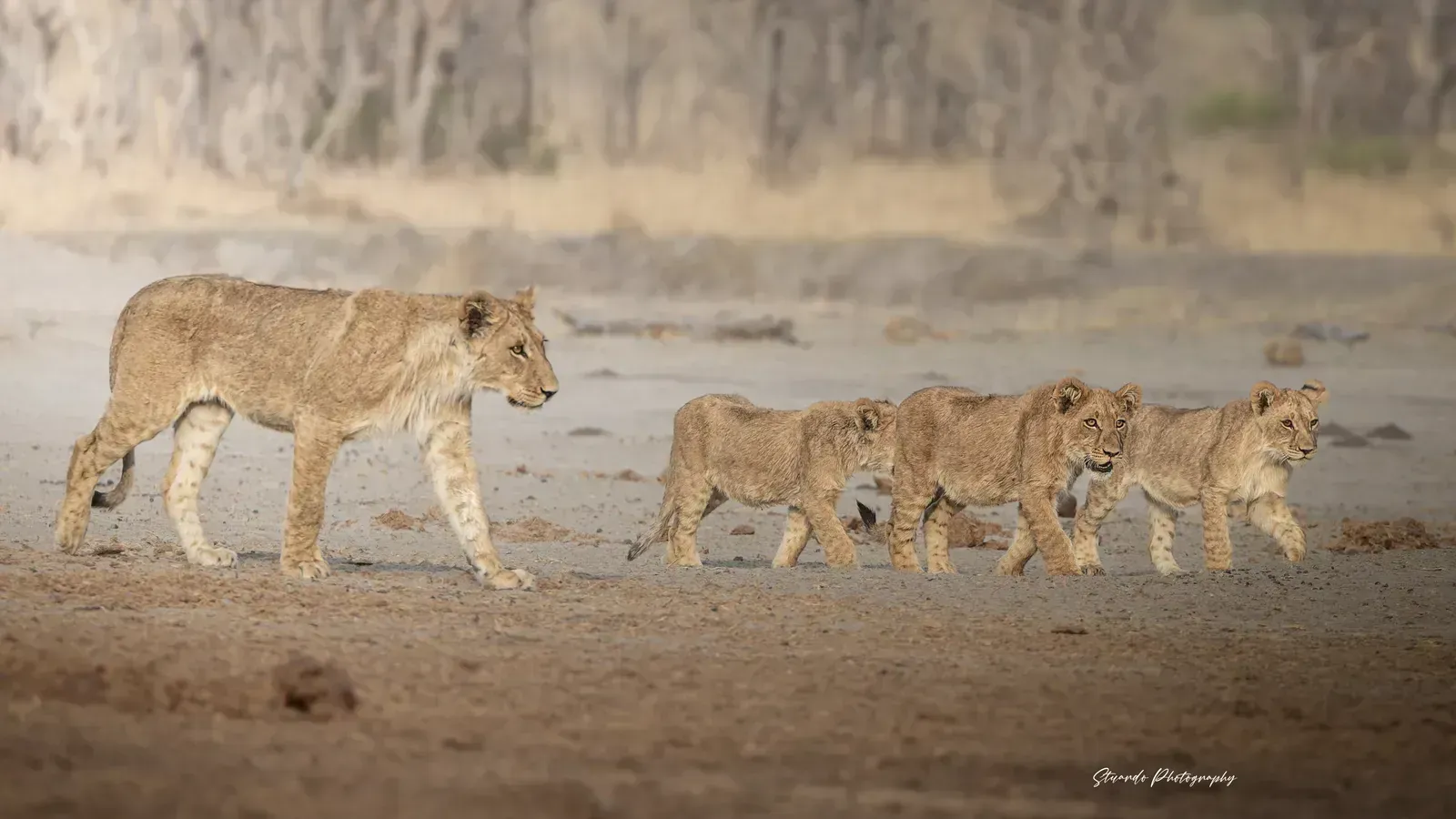
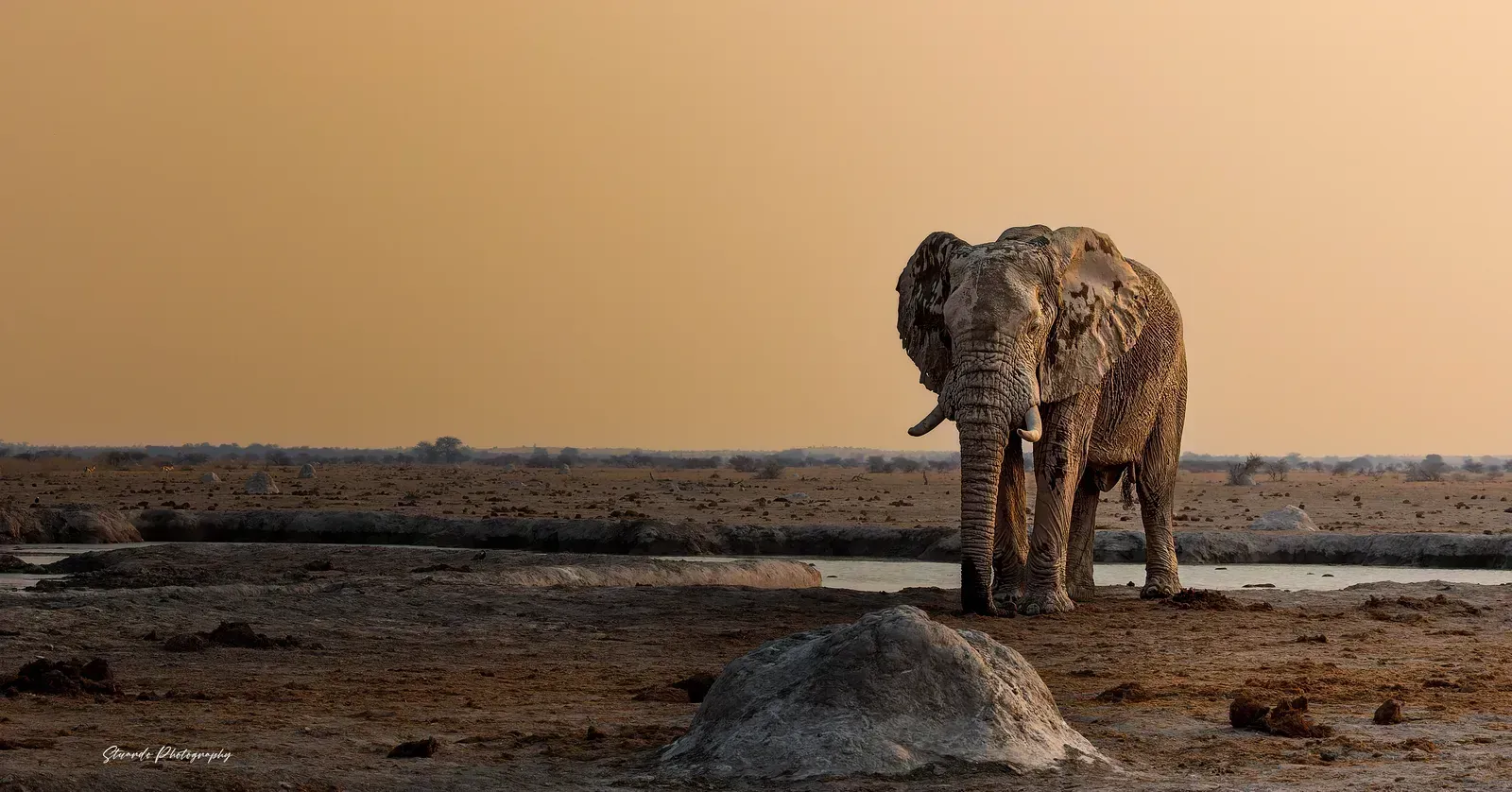
From April to October, the bush thins and the seasonal water vanishes, funnelling elephant, giraffe, zebra, lion and black rhino toward a handful of permanent springs. You simply park, switch off the engine and watch the parade — often a dozen species sharing a single pool.
The rest camps sit right on the pan's edge, several with floodlit waterholes that glow through the night. It's not unusual to sit out long after dinner and watch rhino materialise from the dark, just metres away in complete silence.
It remains a legendary ecosystem offering unparalleled, high-contrast safari photography.
Big-game safariFloodlit waterholesSelf-drive friendlyEtosha Pan
In pictures
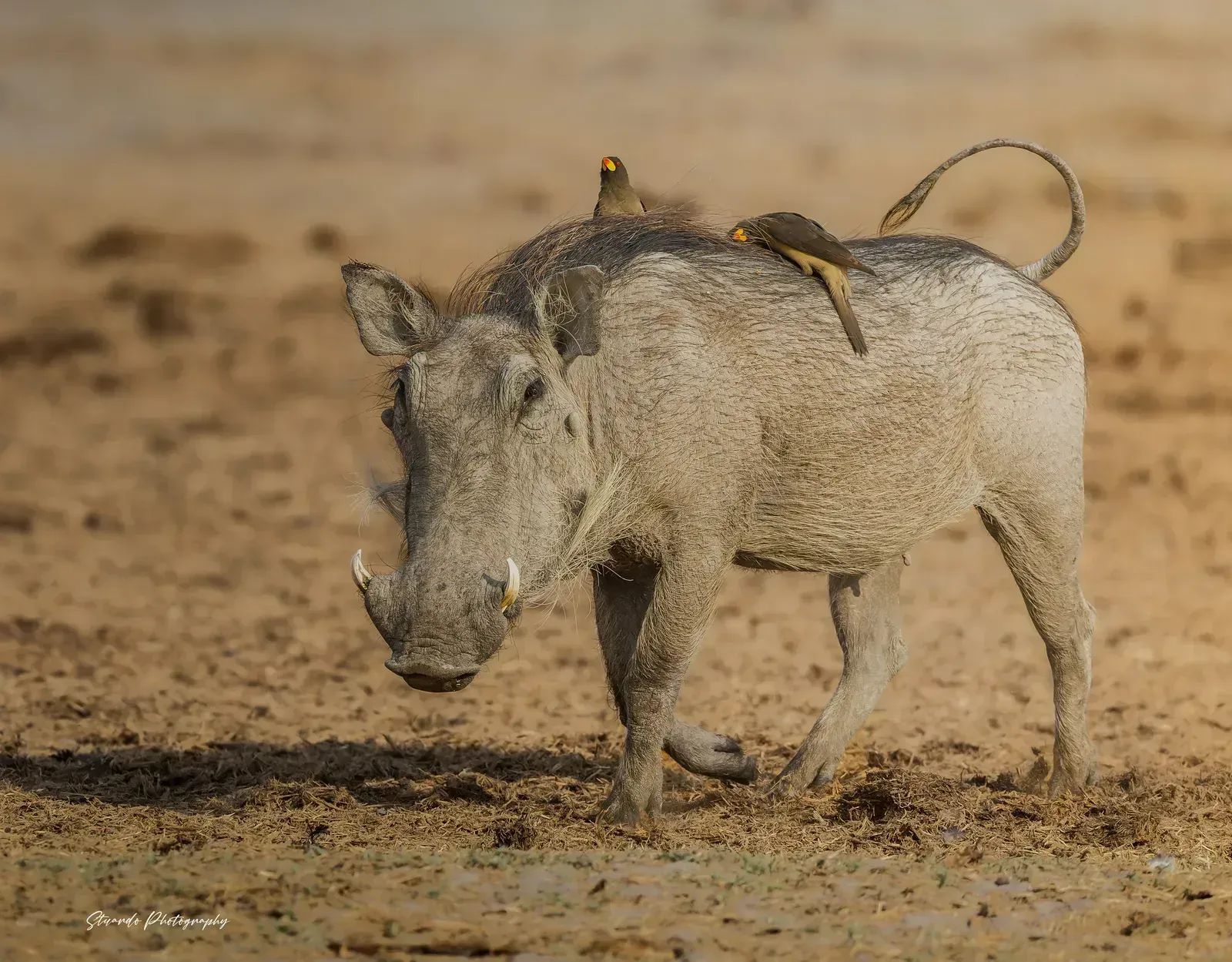
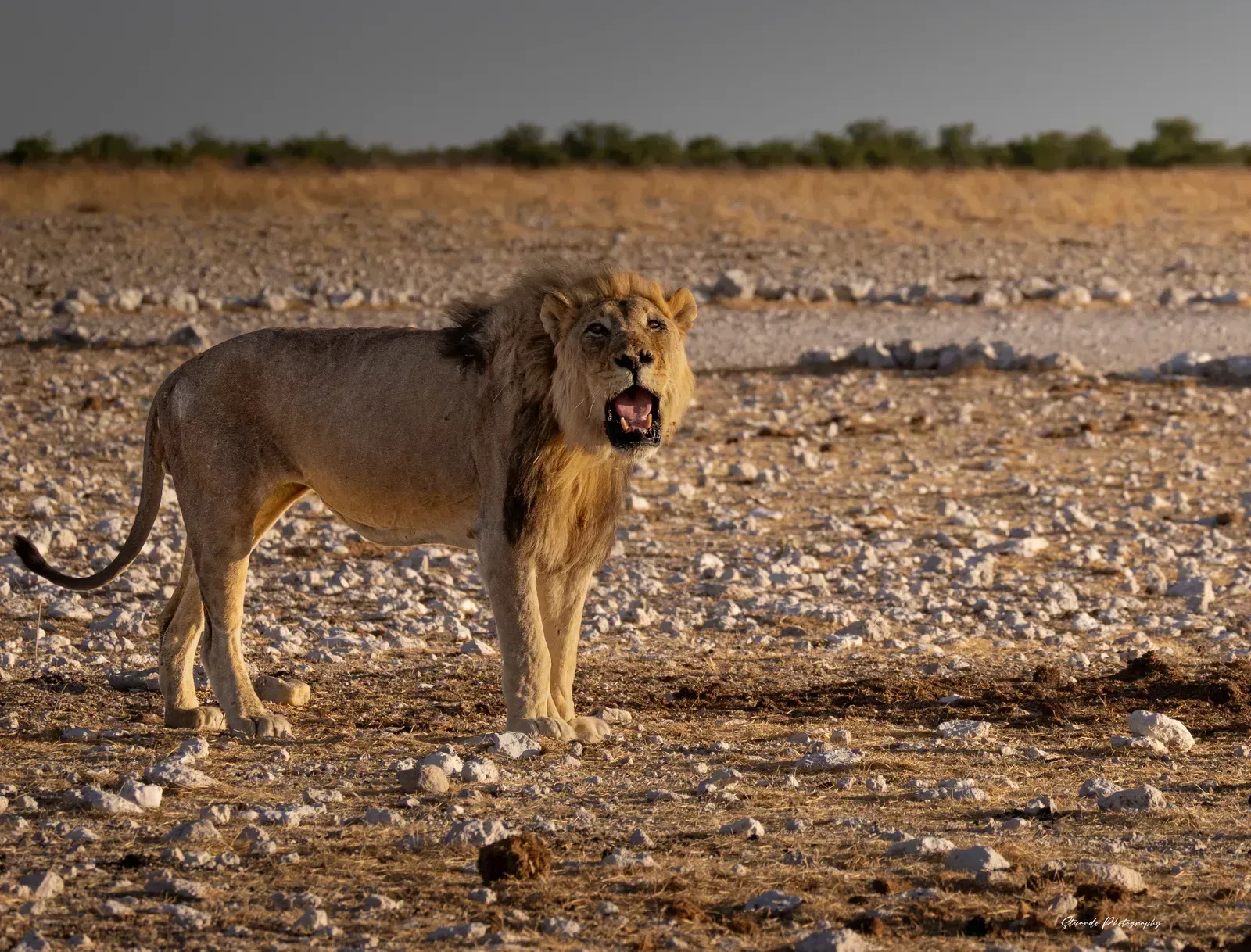
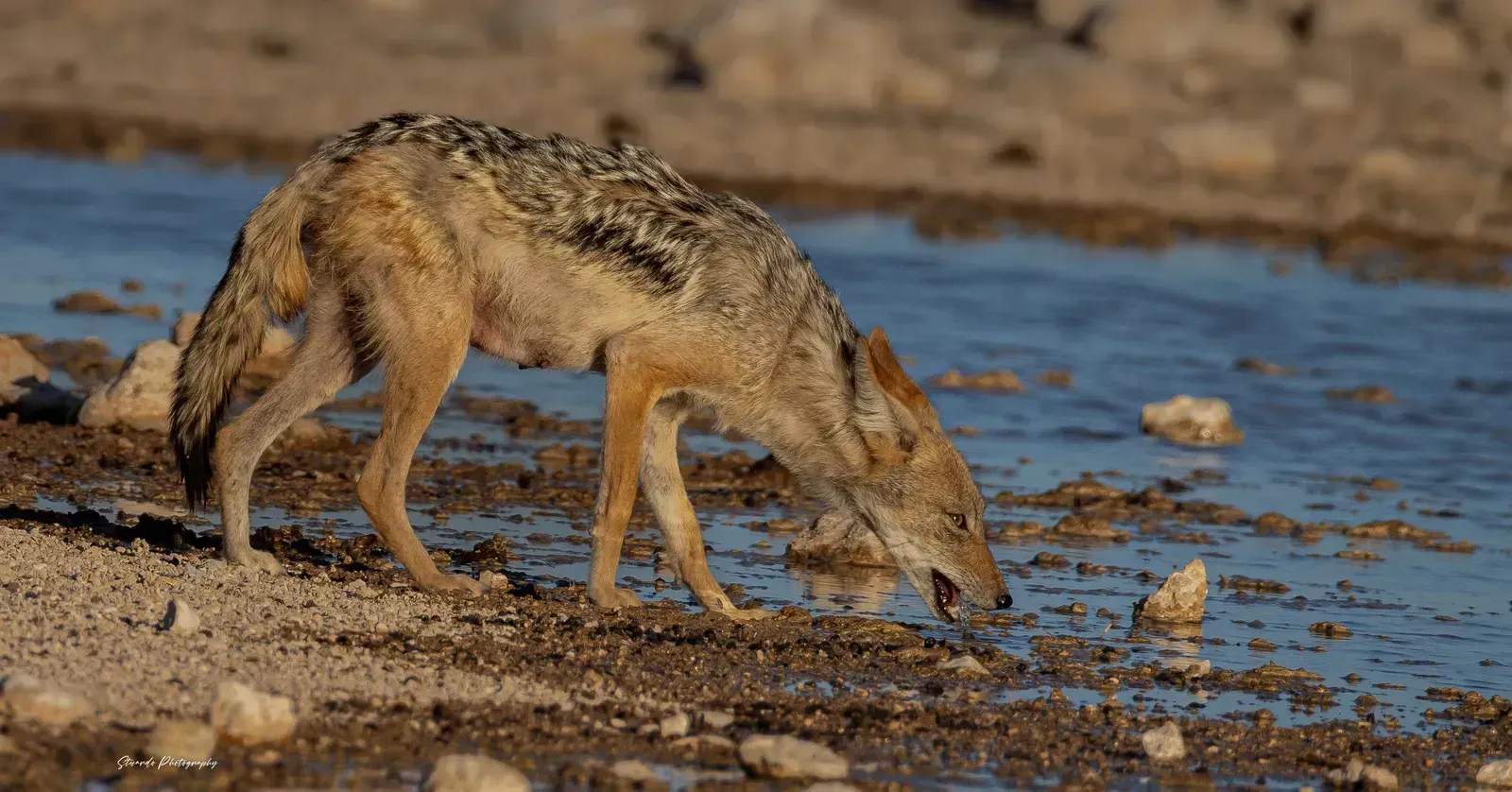
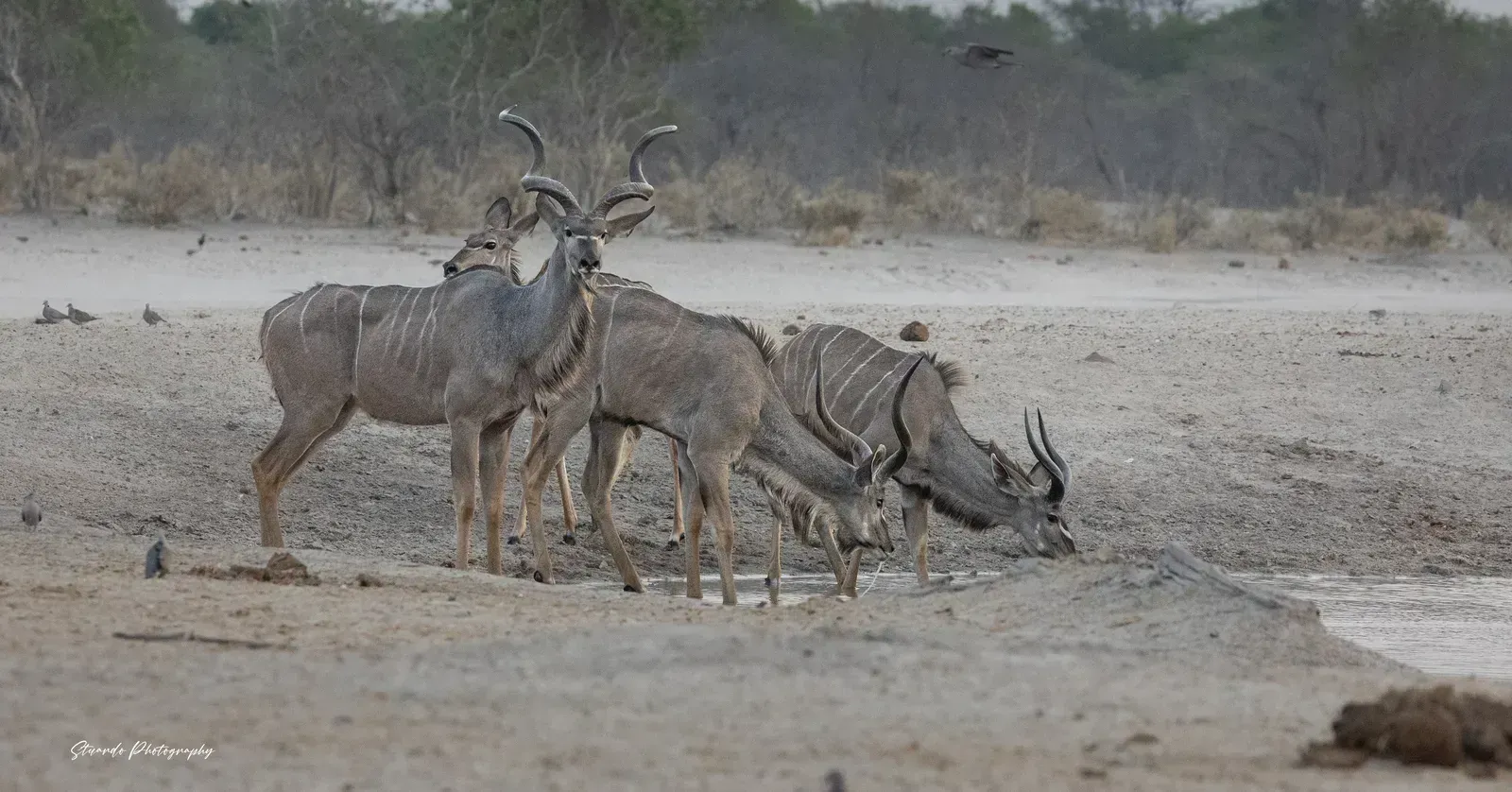
A lone elephant at a dry waterhole as lightning splits a storm-red skyA lioness leads her cubs across the plainYellow-billed oxpeckers hitch a ride on a warthogA lone elephant bull at the waterhole at sundownA male lion roars across the stony plainA black-backed jackal drinks at the water's edgeGreater kudu bulls gather at the waterhole
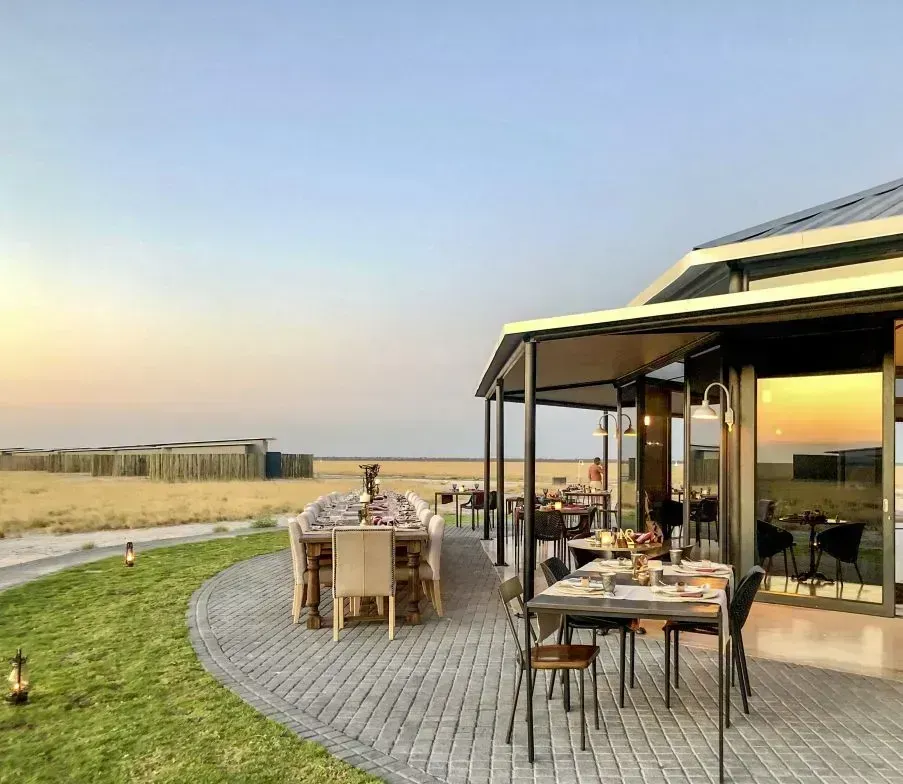
On the open Andoni Plains a kilometre from Etosha's quiet northern gate, this Gondwana Collection lodge pairs the park's wildlife with the culture of Owamboland. Forty Oshiwambo-inspired chalets fan out like a bull's horns, each with its own plunge pool and sweeping plains views — and guests get exclusive use of a private waterhole hide inside the park, alongside game drives and cultural village visits.
PremiumAndoni PlainsPrivate waterhole hidePlunge-pool chaletsGondwana CollectionFrom N$3,625 pp / night
Open our interactive map to drop Etosha into a trip, drag your stops into order, pick your travel style and see a live per-person cost estimate — then send the whole plan to us on WhatsApp in one tap.